Use case · Realistic AI images

Realistic AI Images: Skin Texture Is the Tell

Most realism complaints are about texture, not sharpness. We ran an editorial model on a saved character to see whether the skin held up under a close crop.

socialAF research pipeline·Generated June 1, 2026

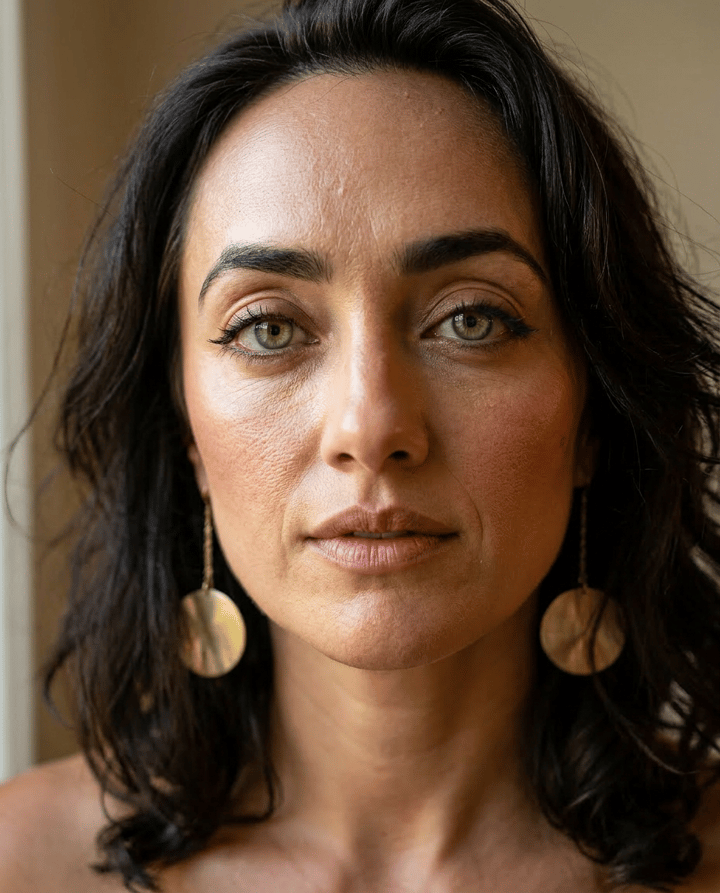
Photorealistic close-up AI portrait with visible skin texture and freckles
Generated in socialAF with the Nova character. nano-banana-pro, 3 credits.

What we ran

On nano-banana-pro at 3 credits, a close-up portrait returned with visible pores, fine skin detail, and freckles rather than the plastic smoothing typical of cheaper renders.

We asked for a tight 85mm-style close-up with natural skin texture. The result kept pore detail and a few freckles instead of the wax-figure smoothing that gives renders away. That texture is what reads as real at full crop.

How to reproduce·Re-run generate_image with the saved Nova character (5 reference images) on the stated model. Prompt gist: hyper-photorealistic close-up of the saved character, natural skin texture, 85mm look, 4:5

Resolution is not the problem

People say an AI image looks fake and reach for resolution. The real tell is almost always skin. Cheap renders smooth the skin into a wax surface, remove pores, and erase the small asymmetries that make a face human.

A lower-resolution photo with real texture reads more real than a high-resolution render with plastic skin.

What the editorial model changed

We routed a close-up to nano-banana-pro, which socialAF favors for editorial realism, at 3 credits. The output kept pore detail, fine skin variation, and freckles.

That is the difference that survives a full-screen crop. At thumbnail size most models pass. At close range, texture is the line between believable and obvious.

When the cheaper model is the right call

Editorial realism costs slightly more and is overkill for a thumbnail or a fast feed post. For those, the standard character model at 2 credits is the better trade.

Reserve the editorial model for hero shots, close-ups, and anything that will be viewed large.

Verdict

Judge realism by skin, not megapixels

Judge realism by skin, not by megapixels. If a face has pores and small imperfections, it reads real. If it is glassy and uniform, no resolution saves it.

Match the model to the crop. Editorial for close-ups, standard for everything else.

FAQ

Common questions about Realistic AI images.

What makes an AI image look real?

Skin texture. Pores, fine lines, and slight asymmetry read as human. Smoothed, uniform skin is the most common tell, regardless of resolution.

Which model should I use for close-ups?

We used nano-banana-pro for the editorial close-up at 3 credits. It held pore-level detail that the standard model softens.

Is the realistic model worth the extra credit?

For hero shots and close-ups, yes. For thumbnails and fast feed posts, the 2-credit standard model is the better value.

Does realism hurt consistency?

No. The realistic image still referenced the same saved character, so the face matched the rest of the set.

Why do my AI images look airbrushed?

The usual cause is over-smoothed skin. Asking for natural skin texture and routing close-ups to the editorial model keeps the pores and small asymmetries that read as real.

Can a realistic AI image pass as a real photo?

At thumbnail size most do. At a full-screen crop, skin texture is the giveaway, which is why detailed close-ups need the editorial model rather than the standard one.

Build your character once. Reuse it everywhere.

Start free

Ready

Build your first character today.

Join creators using socialAF to bring their characters to life. One subscription, every model, no shoot required.

Start today